All work
- Role
- Solo: product, design and research into how children learn to read
- Team
- Solo; Claude Code agents write the code
- Timeline
- Sep 1–28, 2026
- Scope
- edtech · solo
- Status
- Launching Oct 13
- Live
- bukvyk.com
- Made sound a release blocker after reading the literacy research
- 499 words and 136 syllables voiced
- Offline, no accounts, no analytics — built for kids
On day two I wrote in my notes: “The app in its current form is not a product for teaching reading.” It looked finished, with eight games and bright emoji, but it was silent, and children under six learn to read by ear. Bukvyk now teaches Ukrainian children to read, sounds first.
It’s for 4–6-year-olds and works offline. Eleven short games lead from sounds to syllables, words and sentences, with 193 short readings and 70 bedtime tales. It grew out of Abetka, an earlier emoji alphabet concept of mine, and went from a Figma Make prototype to store review in four weeks.
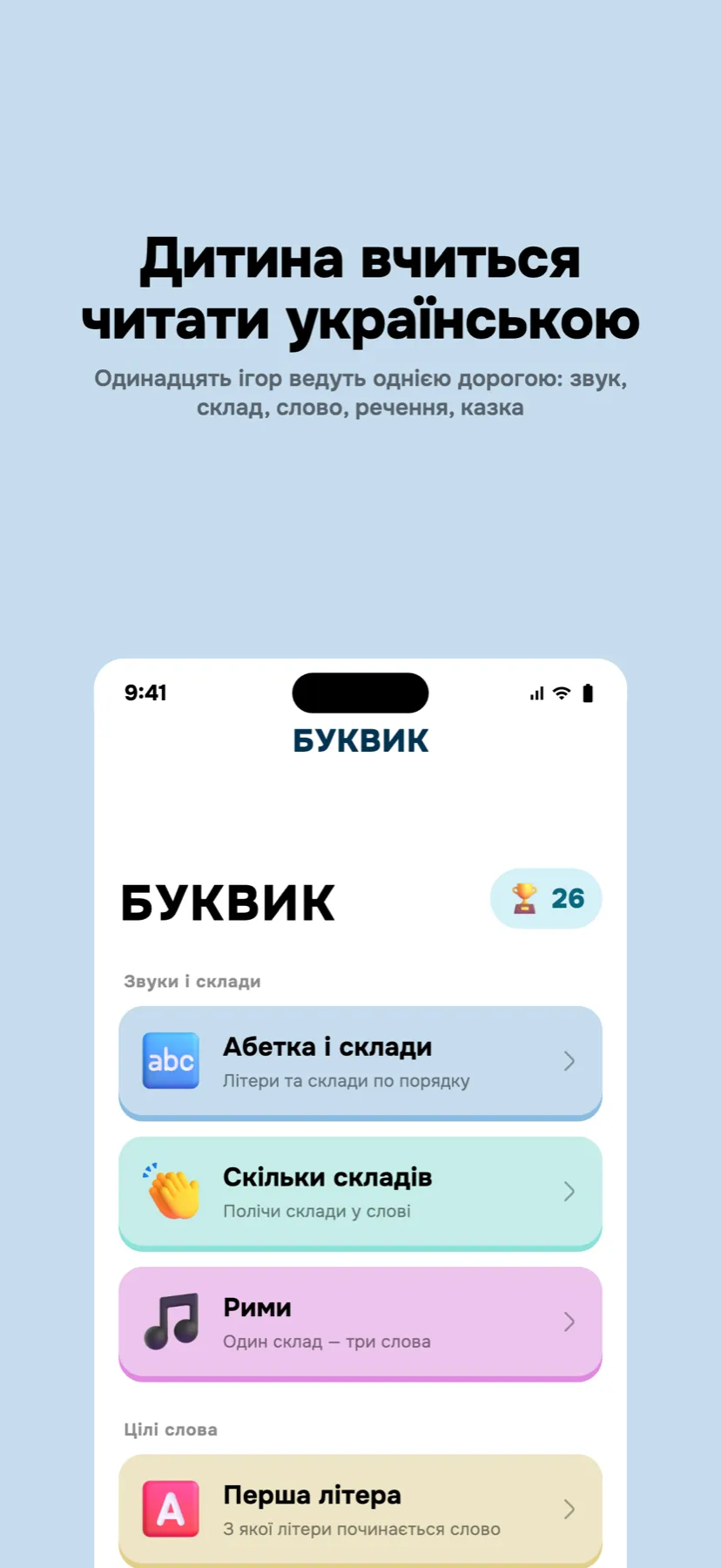
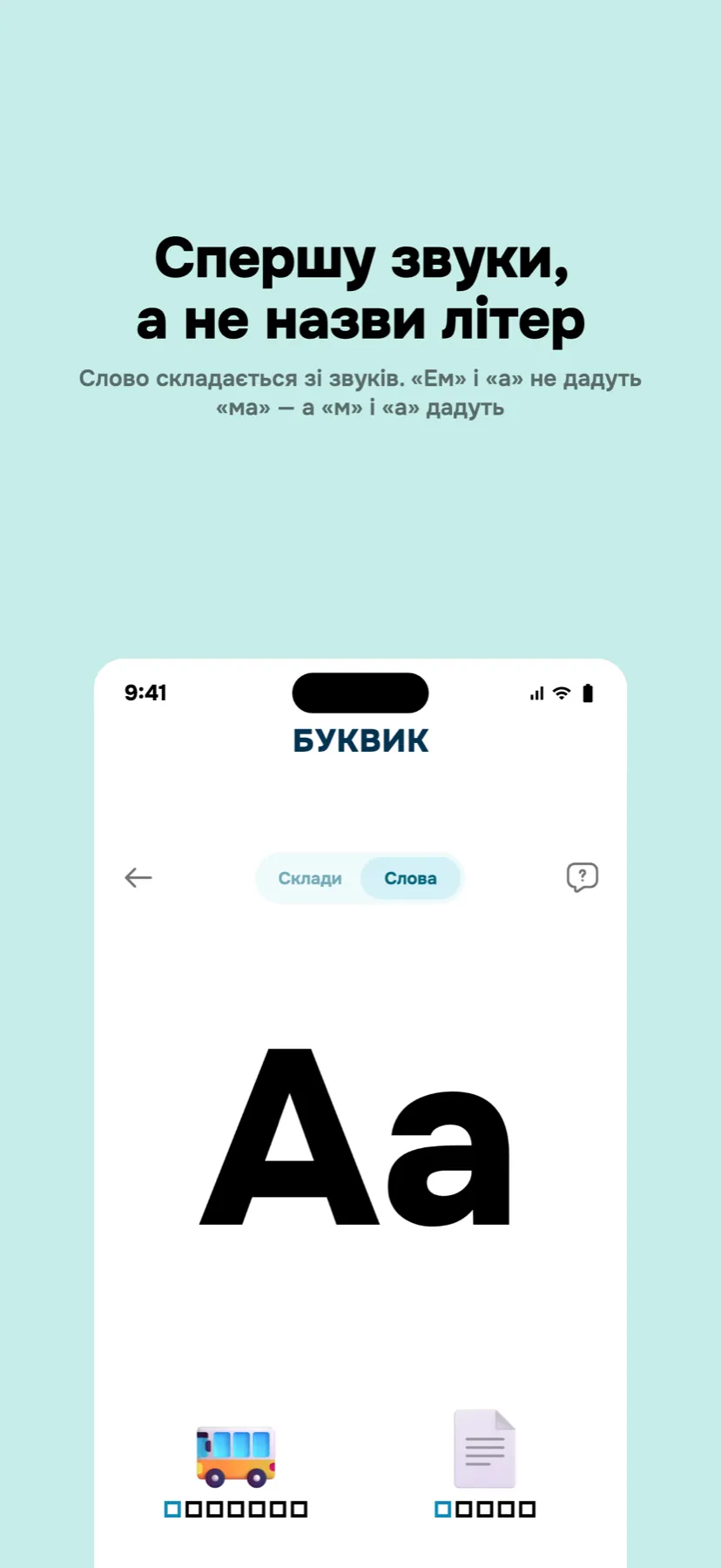
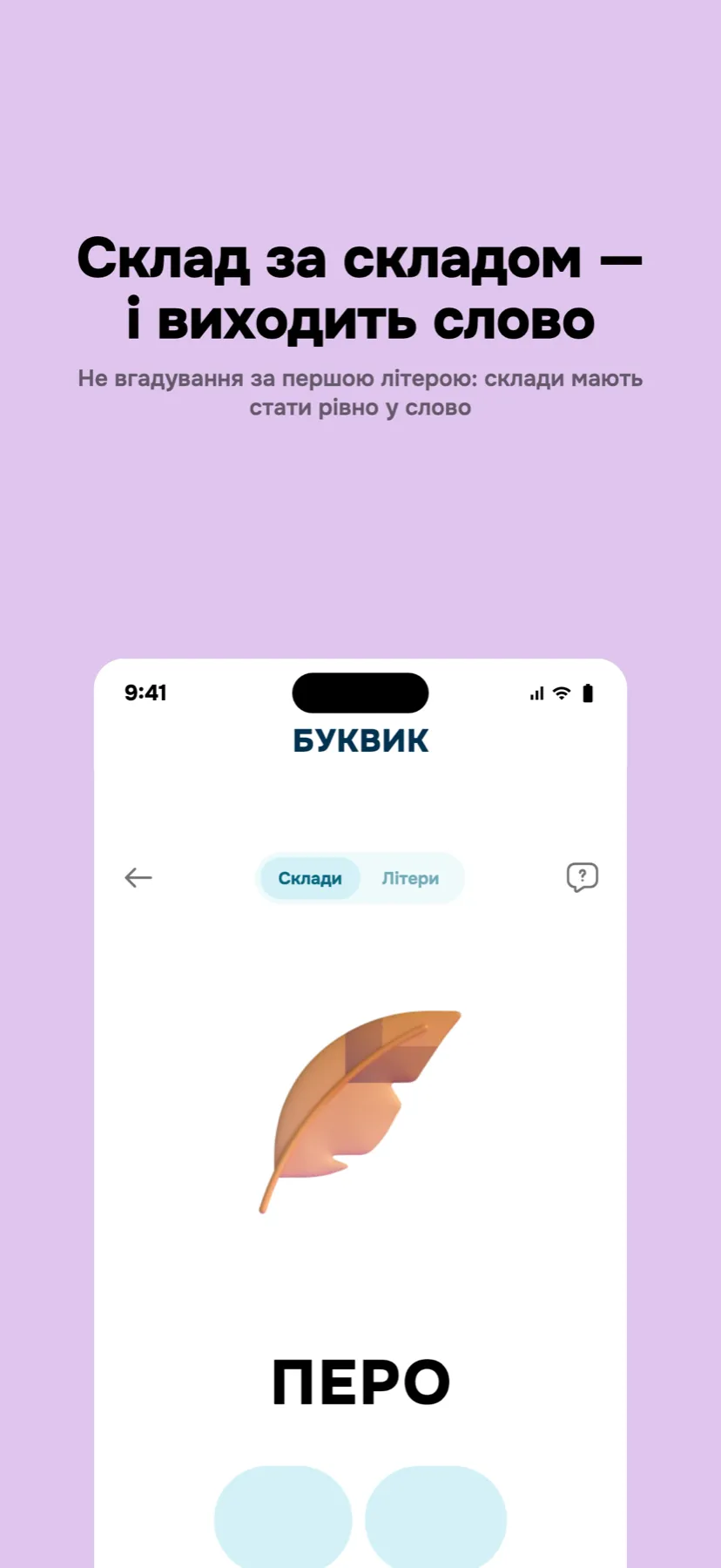 App Store screenshots: one path from sound to syllable, word, sentence and tale.
Diaspora children need a Ukrainian reading app, and there are few good ones
Ukrainian reading apps are few and small. The most successful had about 1,000 ratings after years on the store. Meanwhile 5.7–5.9 million Ukrainians live abroad, and their children learn to read a language they don’t hear at school.
I ported my Figma Make prototype to Flutter on September 1. By the next day it had eight games, emoji for pictures and no sound. It looked like a product. It wasn’t one.
The research made sound a release blocker
On September 2 I went through the early-literacy evidence and put the verdict at the top of my teaching-method notes. The two strongest predictors of reading, according to a panel review of around 300 studies, are knowing letters by name and by sound, and hearing the sounds inside words. Both depend on listening, so a silent app trains neither.
A 2015 review of 43 studies calls built-in narration a must for children under six. GraphoGame, the most-studied literacy game, is built on “hear a sound, pick a letter”. The Ukrainian school method, Ushynsky’s, also starts from the sound. Hence the store line “Sounds first, not letter names”.
So sound went from a backlog item to a release blocker. The app now carries 499 words, 136 syllables, 33 letter names and 32 letter sounds. All are voiced ahead of time and bundled, so a child can use it offline.
Cut 42 illustrated scenes, because a still picture can’t be reliably false
“True or false” showed a picture and a sentence. The AI-generated scenes looked great and didn’t work. “The bear is sitting” is true of any sitting bear, and a reliable false sentence needs a feature you can see. I archived the scenes and their 126 voice clips and rebuilt the game on emoji, with 125 scenes in 15 series.
The reason isn’t the quality of the drawings: a drawn scene is still, and therefore ambiguous.
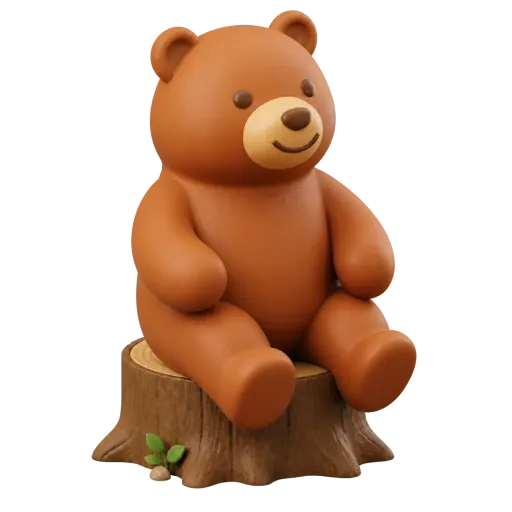

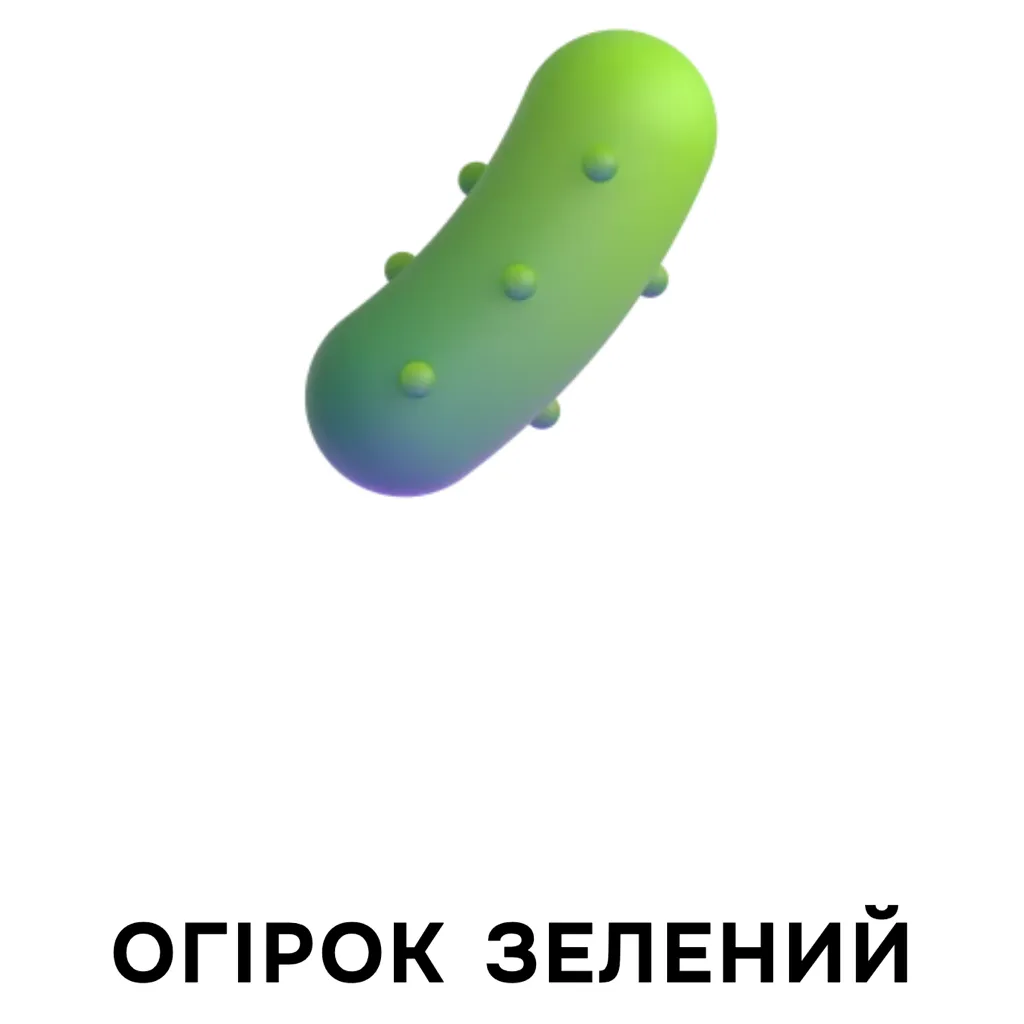 Two of the 42 cut scenes, and what replaced them. “The mouse waves” was true of the cup picture too. “The cucumber is green” can only be true or false.
Removed working narration from the short readings, because children retell what they’ve heard
Narration with word highlighting worked, and I removed it. A child who has heard a text doesn’t read it, they retell it. A memorised text also “reads” twice as fast, which breaks the screen’s one measure, reading speed. The narration research is about understanding stories. These readings are practice in sounding words out.
Cut four finished games that didn’t test what they claimed
Puzzle, “What’s odd”, “What’s next” and “Who is it” were built, and all four went. “What’s odd” could be solved from the first letter without listening. “Who is it” gave clues that fit two pictures at once.
Levels are for the parent, and difficulty adapts to the child
My note on September 15 read: “Levels are a mess. A child who can’t read won’t read a couplet either — that’s parents reading.” A review found that the three-level setting changed the reading task in only two and a half games. Of five options, I chose the one where home-screen blocks become levels for the adult. Each game adapts from the child’s answers, and there are no child profiles.
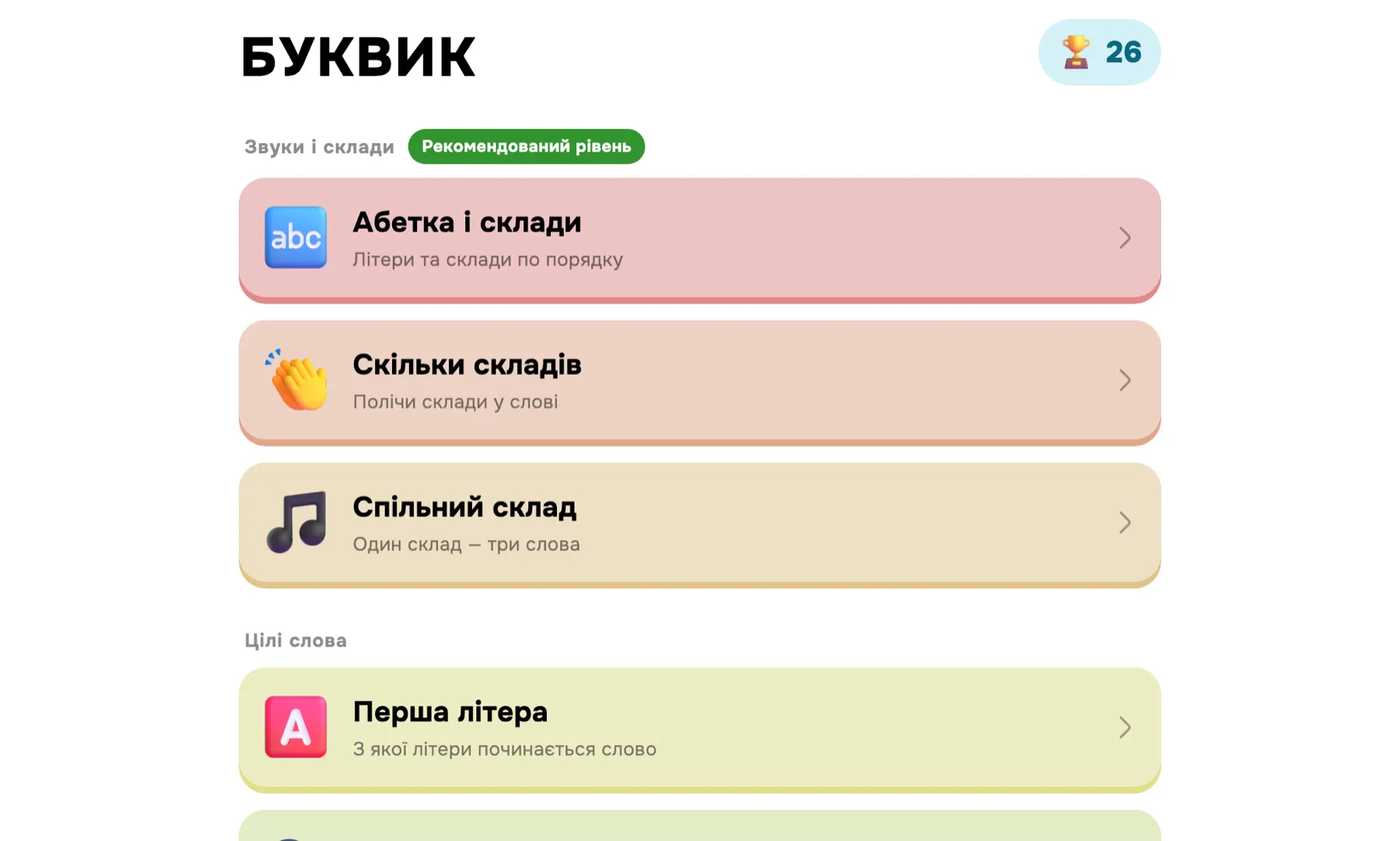 Blocks are the levels. The app suggests a start; nothing is locked.
No accounts, no red, and a price that ends
There’s no backend, no accounts and no analytics. Mistakes are never red; a wrong answer shakes. Look-alike emoji never appear together, so a cat and a kitten can’t both be right.
My market estimate for year one without marketing was $200–3,200. So it’s a portfolio piece and a public good, not a business. It’s one purchase of $4.99–6.99, with a few games free and no subscription:
Learning to read is a finite goal. A parent cancels a subscription exactly when the child has learned. By design.
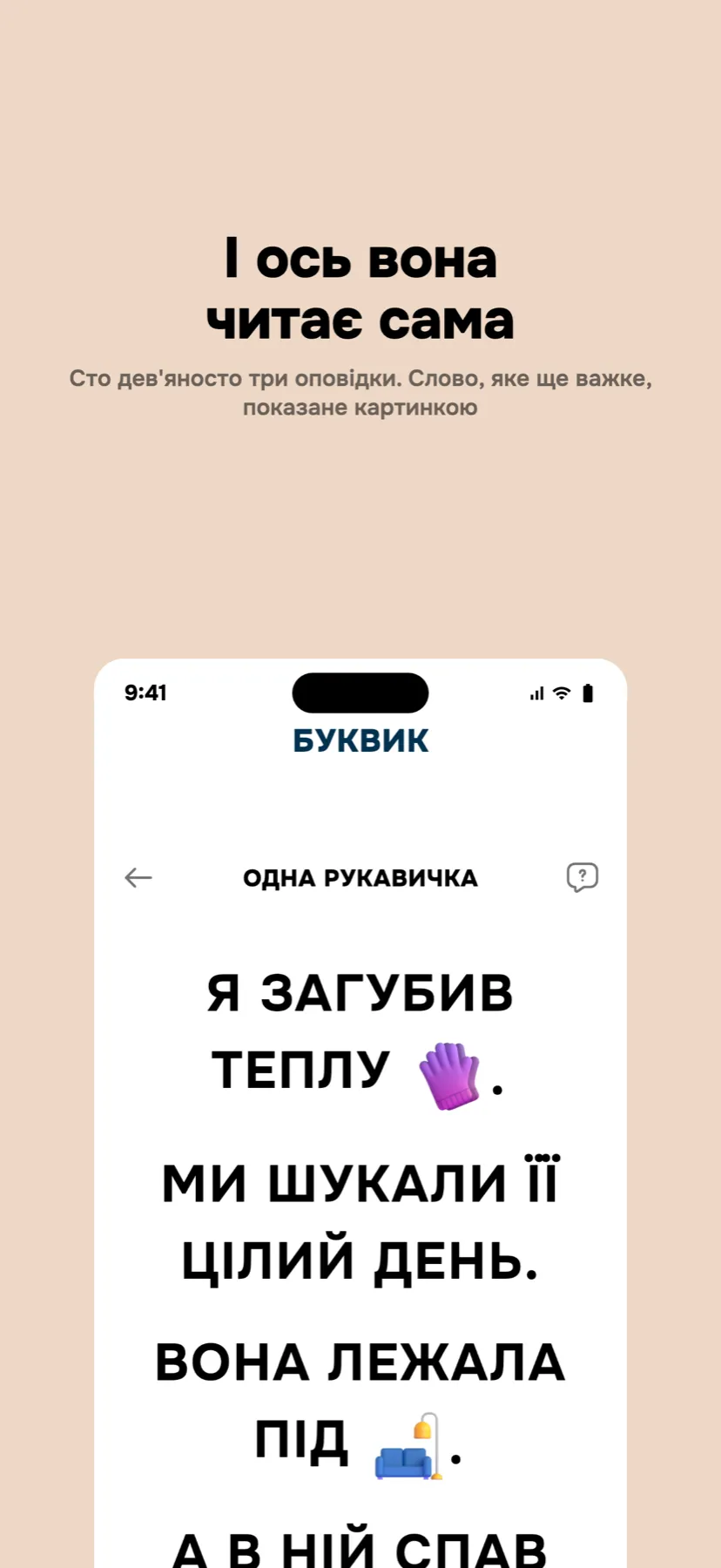
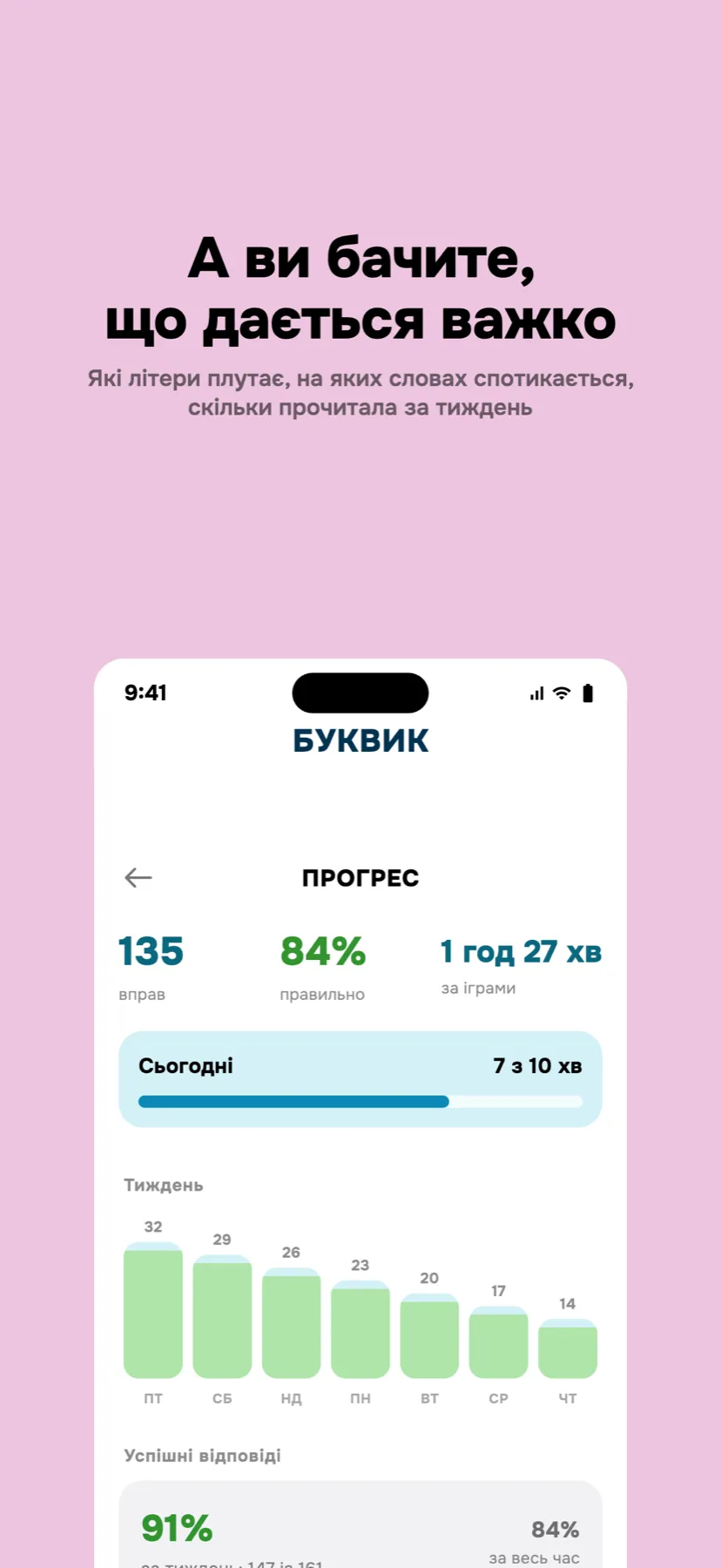 Short readings with no narration, and progress for the parent that stays on the device.
How I worked
I direct AI agents in Claude Code, and they write the code. I own the research, scope, cuts, copy and the final call. Tests guard product rules too, such as “syllables must add up to the word”. The 70 tales were also written by agents, to rules I set (the hero tries three times, no moral at the end), and the archived scenes were AI-generated; picking and cutting was my job.
The voice is synthesised with ElevenLabs, and I pick takes by ear in a small voice lab. When the site and store called it a “live human voice”, I had every mention rewritten to say synthesised and hand-picked, including the featuring request to Apple.
Where it is now
iOS is on TestFlight. Google Play production was submitted on September 28 after a 14-day closed test. Release is October 13, followed by letters to 122 diaspora schools. There are no usage numbers yet. Testers did catch one thing: with iOS’s default audio setting, the app seemed silent. It now plays in silent mode.
What I’d do differently
- Research before the prototype. Eight games were built on a premise the research then broke.
- Ship letter-set levels. The research’s top priority didn’t ship; difficulty follows word length instead.
- Record the sounds with a person. My own research said synthetic voices are weak on isolated sounds.
- Talk to parents earlier. My plan for parent interviews came a week in, when most of the product existed.