All work
cashtime
Car-collateral loan app where I'm the only product owner and designer. I designed it and run the backlog for a team of about six.


- Role
- Product owner & product designer, founding team, the only PO
- Team
- About six: CTO, five developers and QA; plus outside web devs. One backlog in ClickUp
- Timeline
- July 2023 – now
- Scope
- fintech · product owner
- Live
- cashtime.com.ua
- Designed the brand, the iOS & Android app and the website from scratch (4.8★ App Store)
- AI calculator: lead-to-loan conversion from 13% to about 80% in ten days; rolled back because the business chose lead volume
- Wrote 855 of the team's 1,522 tasks; user stories in 84% of tasks after my process change
cashtime lends money against a car, fully online, and the borrower keeps driving. I joined the founding team and designed everything from scratch: the brand, the iOS and Android app and the website. Since 2023 I’ve also been the only product owner: 855 of the 1,522 tasks in the backlog are mine.
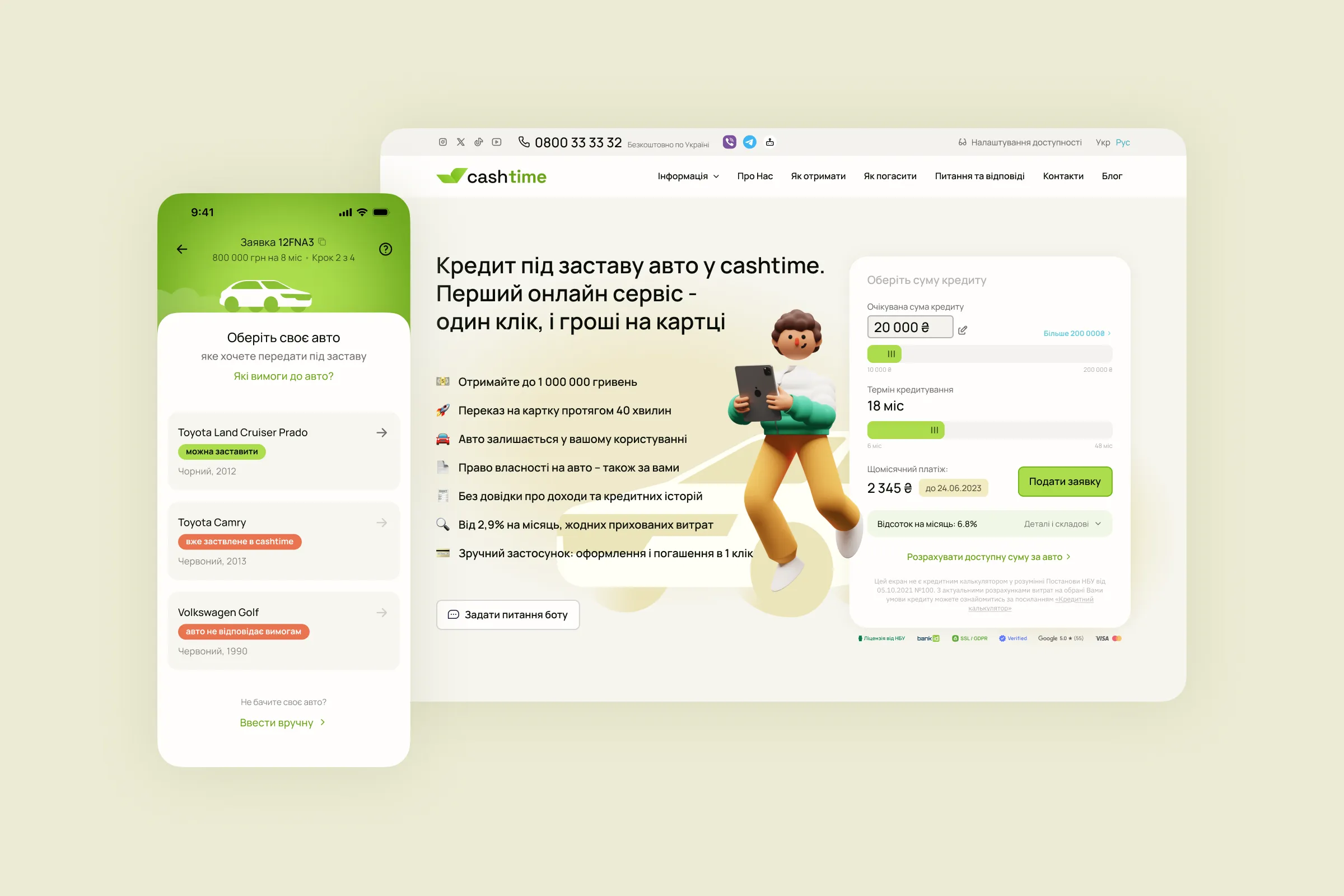
The typical borrower drives a 2013 Passat, needs money to grow a small business and doesn’t read loan terms. I know because I listen to call recordings, read the managers’ chats and talk to them. So most screens tell people what will happen before they tap.
Part 1. The product I design
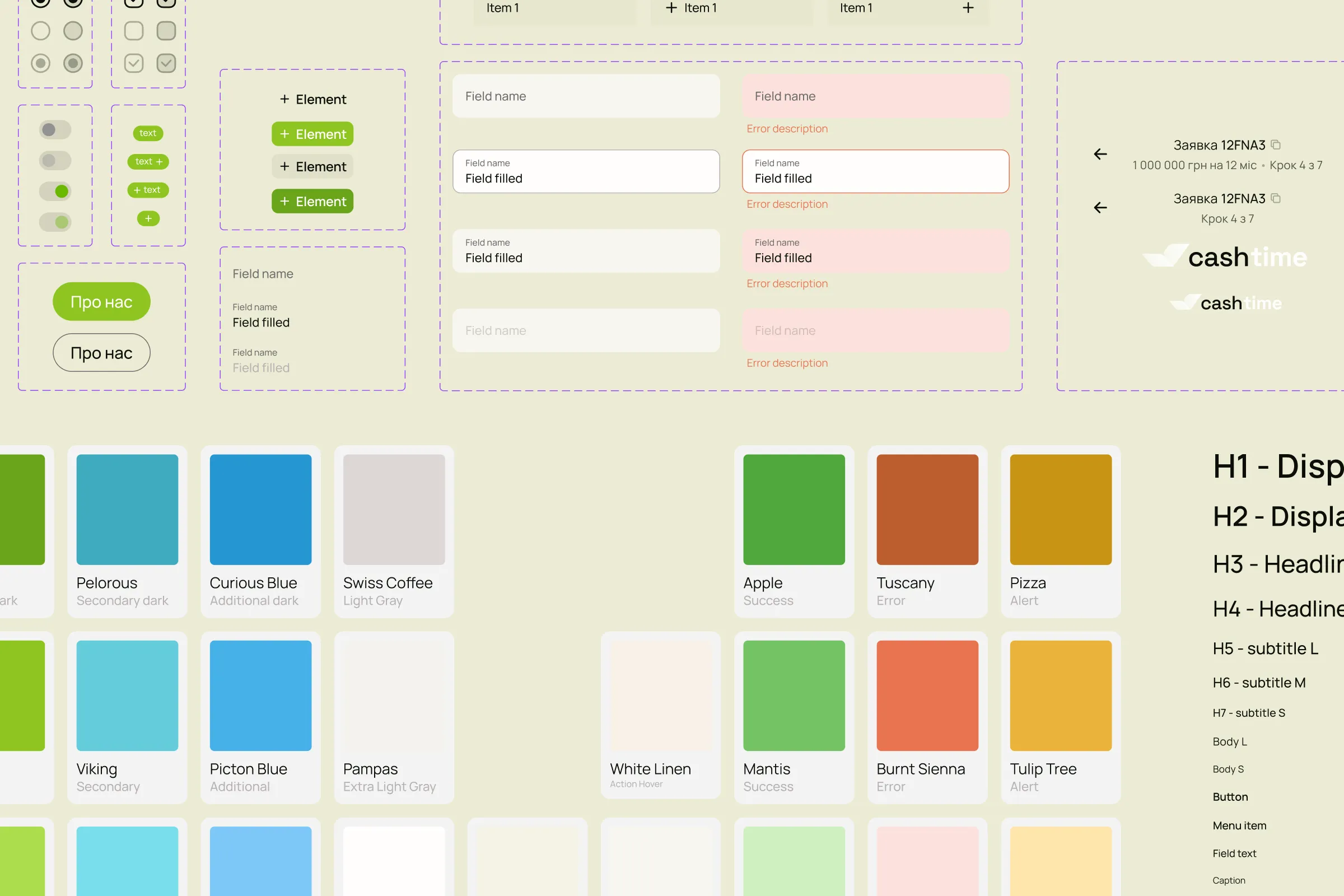 The design system I built at the start.
Most of the flow is set by law
The application flow has worked since launch, and most changes to it come from regulation: BankID, more questionnaire data, disclosures. My attempts to cut steps mostly hit the law. For about six months I tried to send the borrower’s ten or so contract documents for e-signature as one batch, but the law requires each to be signed separately. So I work on what the borrower sees and understands at each step. Every legal feature is shown to the legal team and the developers before release.
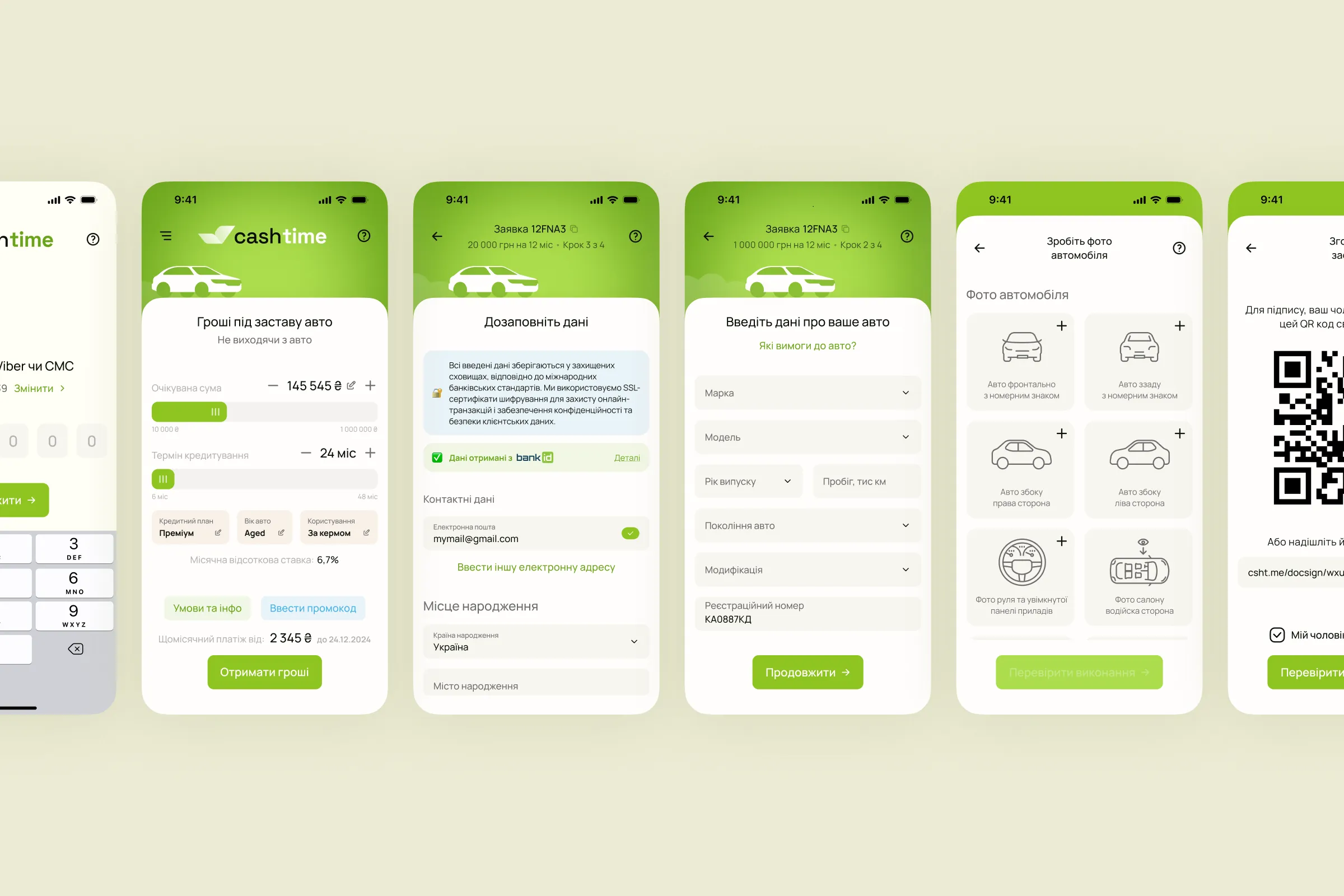 The application, step by step: sign-in, amount, data via BankID, the car, its photos, the signature.
The AI calculator
The old calculator was two sliders, with no link to what the car could secure. I put an AI step in: it analyses the car and returns a ready calculation. The flow got longer. Leads fell by about 85%. But lead-to-loan conversion went from about 13% to about 80%. By that math, loans stayed roughly level while managers had a sixth of the leads to work through. The business still chose volume, since rejected traffic can be resold and the first-touch chart looked alarming, and the old calculator came back after ten days.
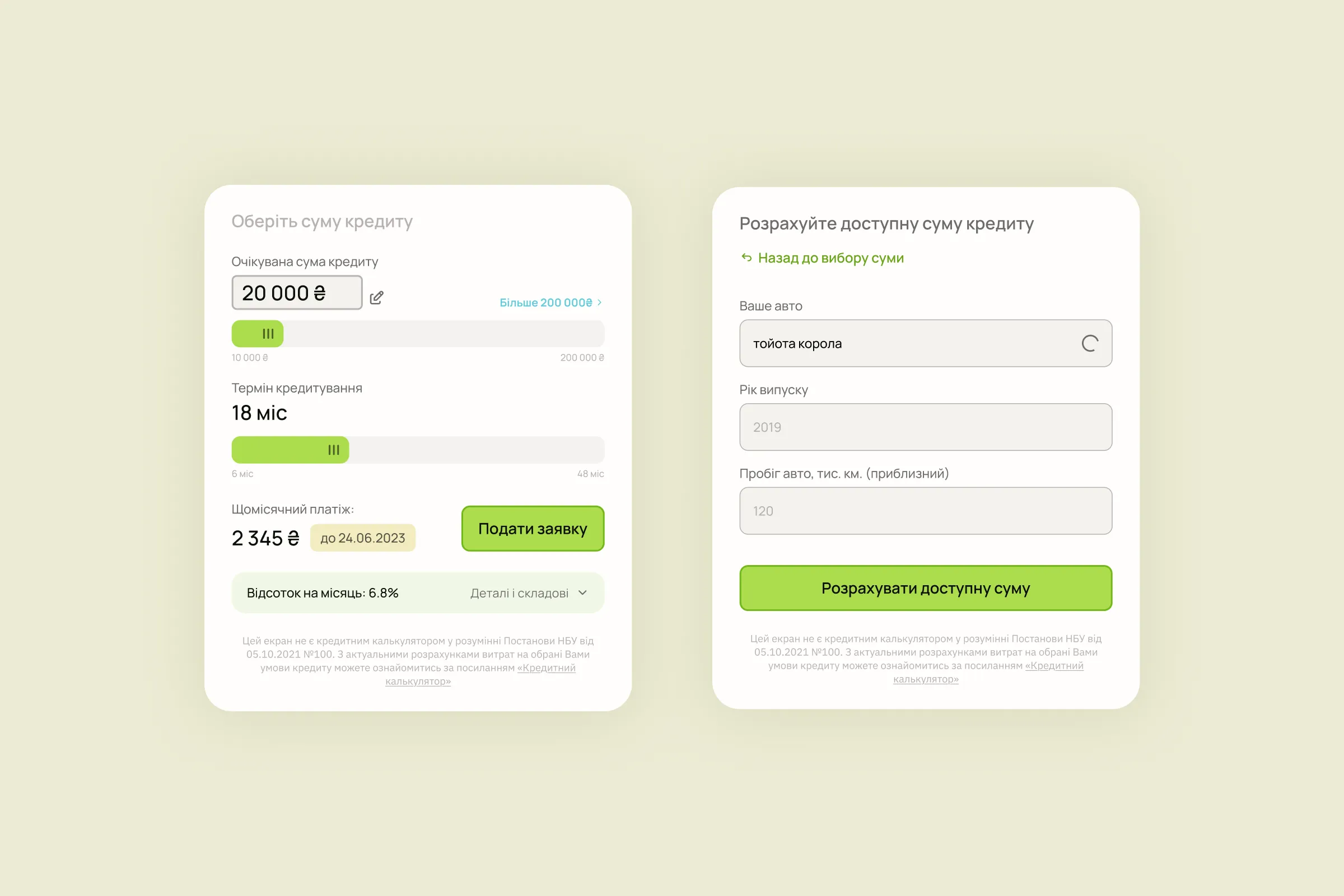 Two sliders (left) versus asking about the car first (right).
Daily interest and late-payment penalties
Daily interest was a legal requirement. Late-payment penalties are on their third try. When they were ready, the accrual order turned out wrong. We rebuilt the personal cabinet and the back-end logic, then the operations director stopped that version too. Cabinet 3.1 is going out now. On the loan screen, anything needing action sits at the top and the repayment order is explained before you pay. After release, the share of borrowers who looked for help after a payment reminder fell from about 39% to 18% (small sample). I also added a 0.01% rate for new clients’ first two weeks. It’s rolling out now, with the data analyst’s sign-off.
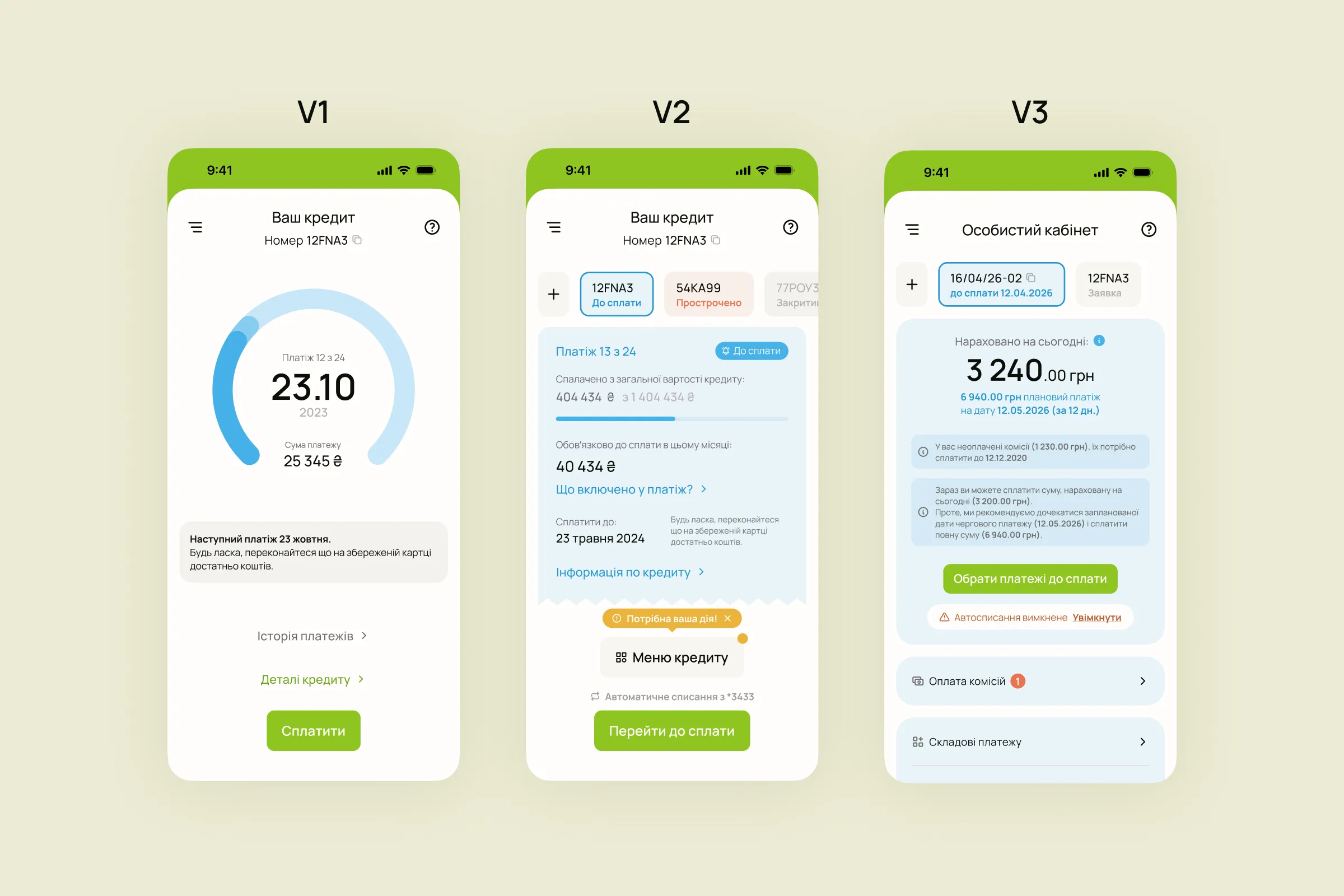 The loan screen, V1 to V3.
The preapproval queue
Preapproved applications got lost in one long list. I decided how the admin should handle them: stages, sorting, reason tags, and auto-archiving after 30 days of silence. These were product decisions. The admin is designed by the developers; I step in when a decision is hard. That week a manager wrote that the team could finally work through preapprovals properly.
Part 2. The backlog I run
Unlike at Keyword Insights, this team has a core, more than one person, and it knows where it’s going and why. Carrying this many roles is a lot, so I delegated part of the work and lowered the quality bar where it wasn’t needed.
How I run the team
The business and legal people bring me tasks. I translate them into the developers’ language, run refinements and split the work. A lot of my time goes to the calls and processes I run as the PO: retros, grooming, syncs.
“Faster to prod” versus “it needs design and legal”
My most frequent disagreement with the owner: he wants it in production faster, I want the design and the legal side done first. As the person responsible for the product, I usually get the design and legal work done first. When the business brings new ideas, I keep the roadmap order. Two parallel tracks, one marketing developer and one business-and-legal developer, let both sides move at the same time.
From “needed yesterday” to a pull system
In early 2026 I moved the team to Kanban with a work-in-progress limit, every request as a task, and a template with a user story, acceptance criteria and a success metric. User stories went from under 1% of tasks to 84%. The limit broke within two weeks and the daily stand-up didn’t take, but the change made QA the visible bottleneck, which led to hiring a test-automation engineer.
Ranked problems by how long they’d gone unfixed
With agents, I traced 719 applications through 12.7k messages in the team’s chat and ranked each problem by frequency and by age. Entering a spouse’s details came up 68 times and had been broken for over a year. It got its own screen.
Built with AI agents when the team had no time
A support bot (paused before launch), 28 city sites on one template, a legal-copy pipeline that rewrote 1,162 fields with zero search regressions, and an analytics prototype on a mock API shaped like the real one.
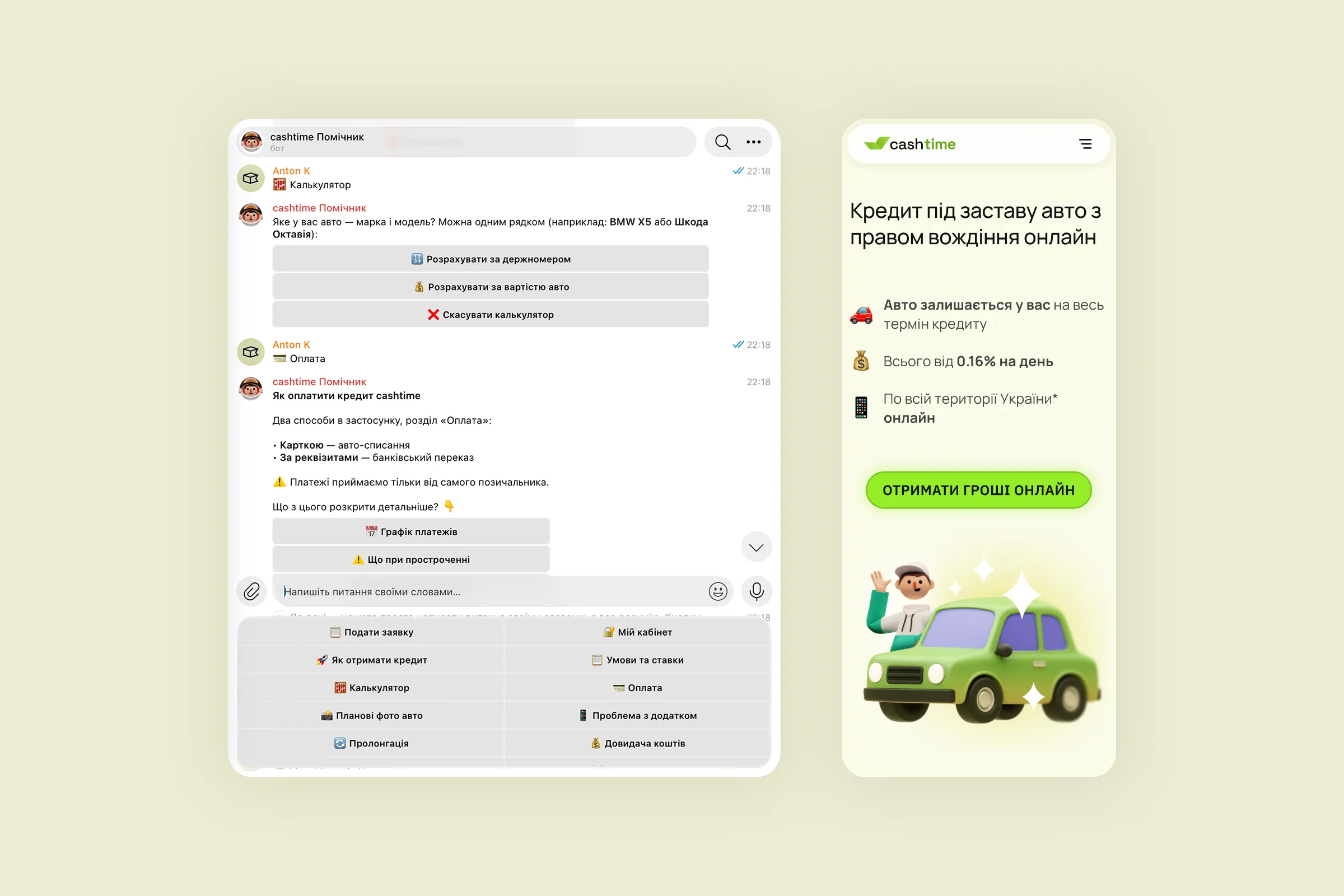 The support bot and one of the 28 city sites.
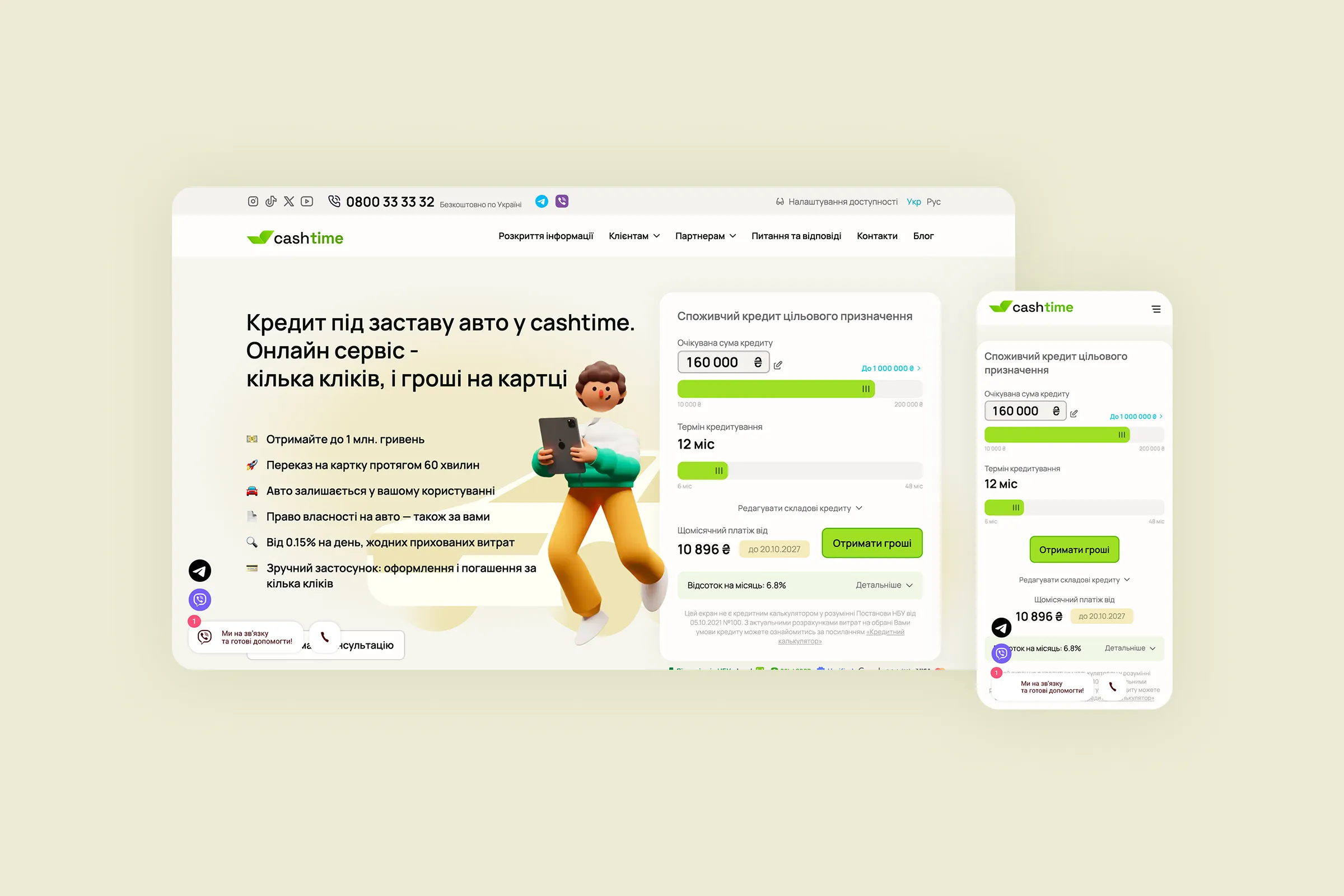 The website today, after the legal-copy pipeline.
What I’d do differently
- Agree the success metric before launch. Leads and loans showed different results for the calculator, and the business went by the leads chart.
- Keep the design system alive. I built one at the start and stopped maintaining it under the load. Every new screen now costs more.
- Launch the bot smaller and sooner. A read-only FAQ widget would have shown in weeks what people actually ask.